
LACRIMAL IRRIGATION
Watery eyes are a problem that many people are faced with day to day. It can range from mild watering when outside in the cold to constant excessive tearing all day long which can lead to irritated skin and frustration.
Although this can be normal and some eyes more sensitive than others, occasionally the problem can be due to a blocked tear duct.
The Lacrimal Drainage System
Each eye has two tiny drainage openings called puncta which collect tears from the surface of the eye. These are very small drainage holes in the inner corner of the eye. Tears continually drain down these holes and lead to a small pouch inside the side of the nose called the lacrimal sac. From here, the tears continue down the small drainage pipes and empty into the nose and throat.
Occasionally, one or more puncta can get blocked. This means the tears cannot drain down the pipe and instead overspill.
Why is a blockage in the lacrimal drainage system a problem?
Without proper drainage, tears will not drain properly from the eye. This can lead to:
- Excessive watering
- Build up of discharge
- Recurring infections
- Irritation and dry eye

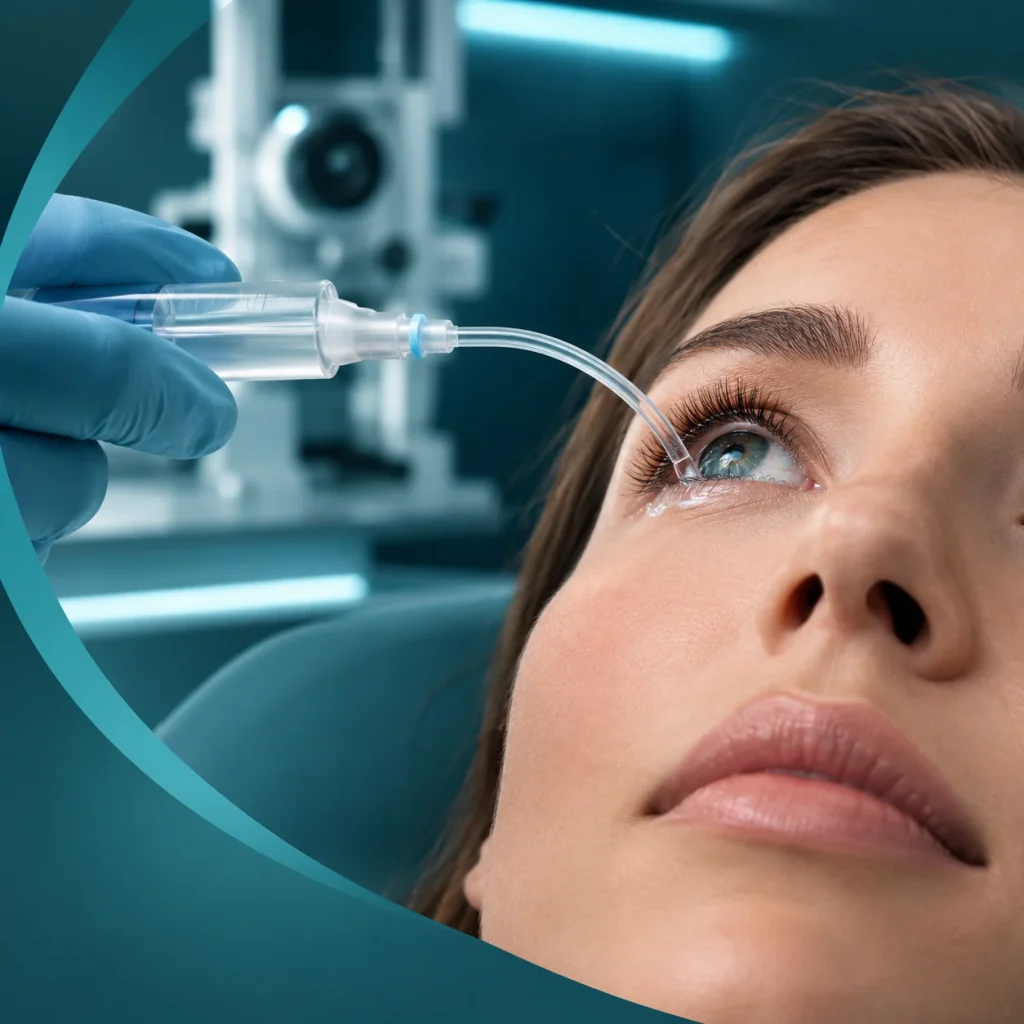
Lacrimal Irrigation
Our Award-Winning Dry Eye service offers a procedure called Lacrimal irrigation to diagnose and help this problem.
Lacrimal syringing or irrigation is a medical procedure which involves flushing sterile liquid down the puncta of the eye to assess if any blockages are present in the pipe. It can also treat any smaller obstructions.
What is involved with lacrimal irrigation?
This is a safe and painless procedure, made comfortable by insertion of an anaesthetic eyedrop on to the tear duct prior to performing the procedure.
This procedure is performed in the comfort of the familiar test room, by tilting head slightly back against the chair.
To start the procedure, the optometrist will use a small tool to temporarily widen the opening of the tear duct. A small non sharp syringe containing sterile fluid is then inserted into the puncta and contents emptied. Often this can make the eye watery, or occasionally some fluid can be felt or tasted at the back of the throat.
The optometrist will then discuss the findings and next steps available.
Who is suitable?
Our optometrists will assess whether lacrimal syringing would be an effective management option.
Irrigation is beneficial for patients with:
- Chronic excessive watering of one or both eyes
- Discomfort in the eyes or on the skin due to poor drainage of tears
- Recurring infections of the tear duct
Who is not suitable?
- Patients with active infections
- Patients who have active blepharitis or inflammation of the lids
- Patients who have irregular punctum, or surgery/stents in punctum