
MYOPIA MANAGEMENT
Children’s eyes are still growing, and this can mean their short sightedness can increase too. A stronger prescription every year can feel like something you just accept, but with the proper intervention and treatment, it doesn’t have to be. Myopia management focuses on slowing down the growth of your child’s eye, rather than just correcting the blurry vision. It won’t get rid of your child’s glasses, but it can help them end up with a lower prescription by the time their eyes have finished growing. This can reduce their risks of serious eye problems later in life.
Pinder Eyecare is award-winning, and was named the UK Myopia Management Leader 2025, so give your child’s sight the best chance at our specialist clinic in Shawlands.
What is Myopia?
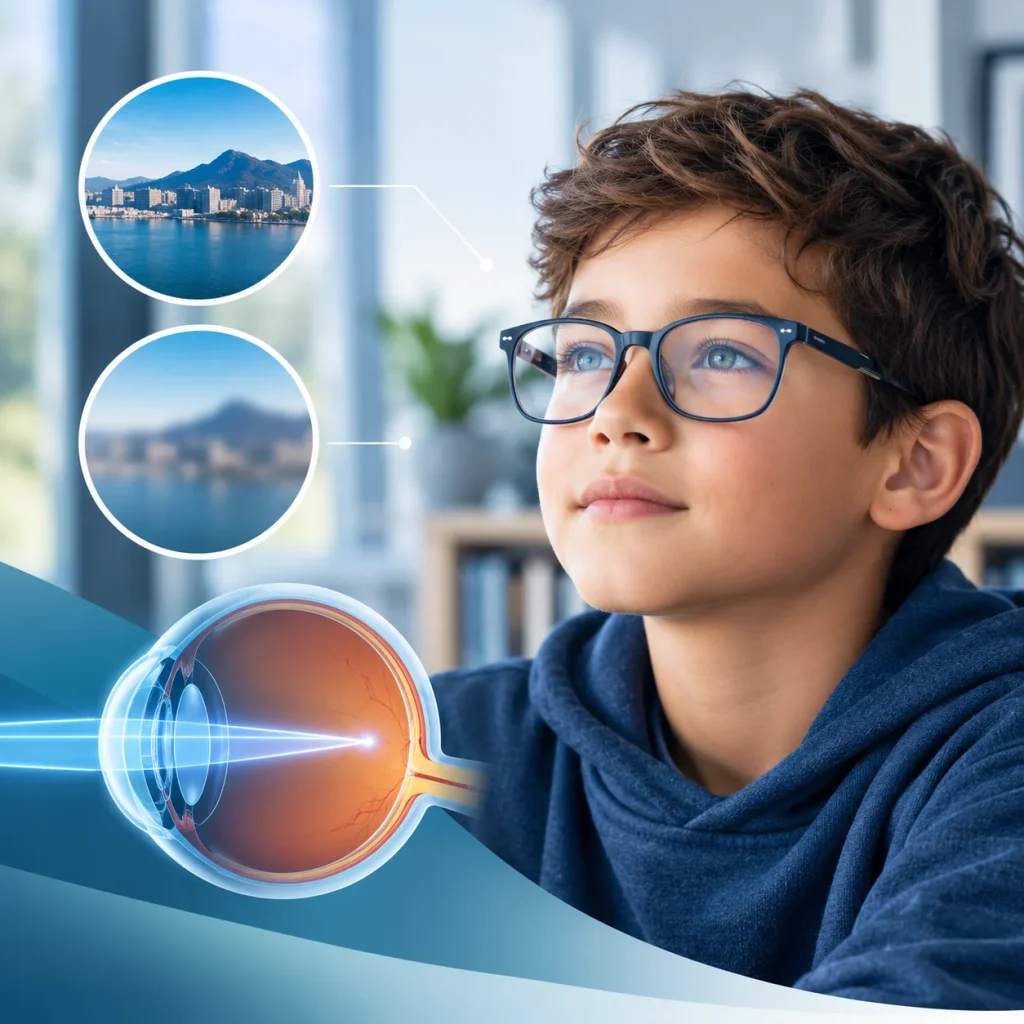
Myopia, or short sightedness, is when the eye grows too long or the front surface of the eye is too curved.
This means light focuses in front of the retina instead of directly on it. This makes things in the distance look blurry, while close up things stay clear. Myopia is becoming increasingly common. By 2050 it is predicted that around 50% of the world’s population will be myopic.
What causes myopia?
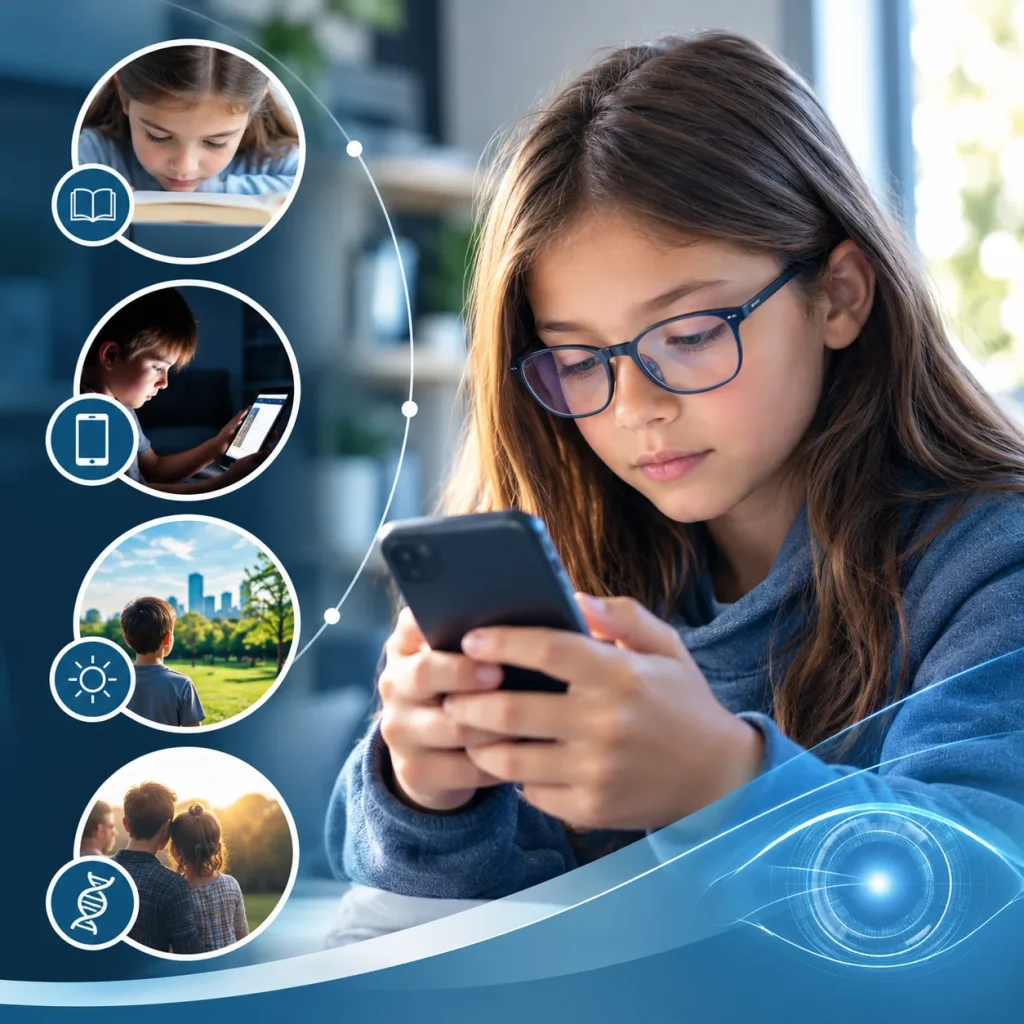
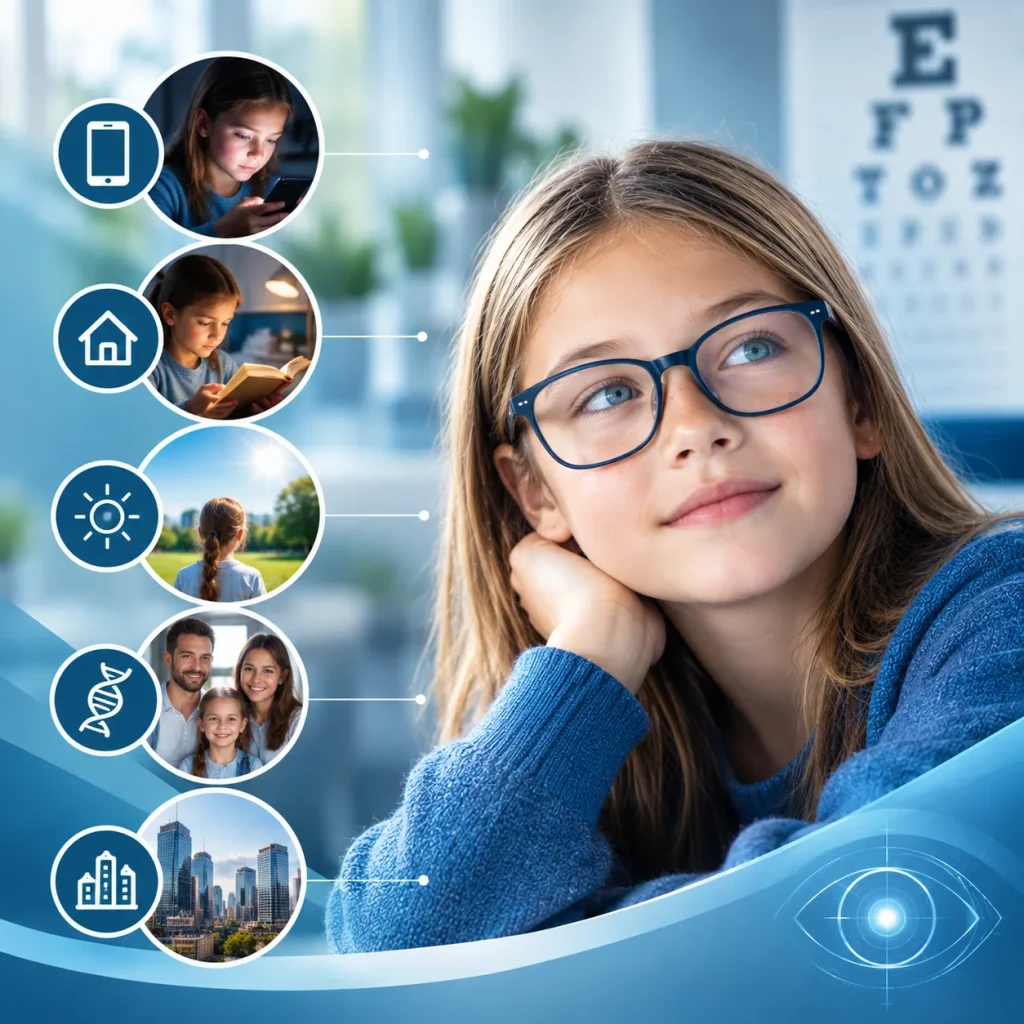
Myopia is caused by a combination of things. Genetics, lifestyle and environment all play a part and unfortunately some of these things are out of our control.
- Genetics - If one parent is myopic, a child is around 3 times more likely to become myopic. If both parents are myopic, that risk increases further.
- Lifestyle - Children are spending more time inside doing close-work than ever before, with things such as reading, studying, using smart phones, tablets and other screens. It’s not as simple as saying ‘screens cause myopia’, but lots of close-work and reduced time outside can increase the risk.
- Environment - Time outdoors can help significantly in reducing the progression of myopia.
- Ethnicity - Myopia is more common in some ethnic groups, with East Asian children having a particularly high risk.
What are the signs of myopia?
Children don’t always tell you that they can’t see properly, they often assume everyone sees the way they do. This is why regular eye examinations (annually or more often if required by your Optometrist) are important.
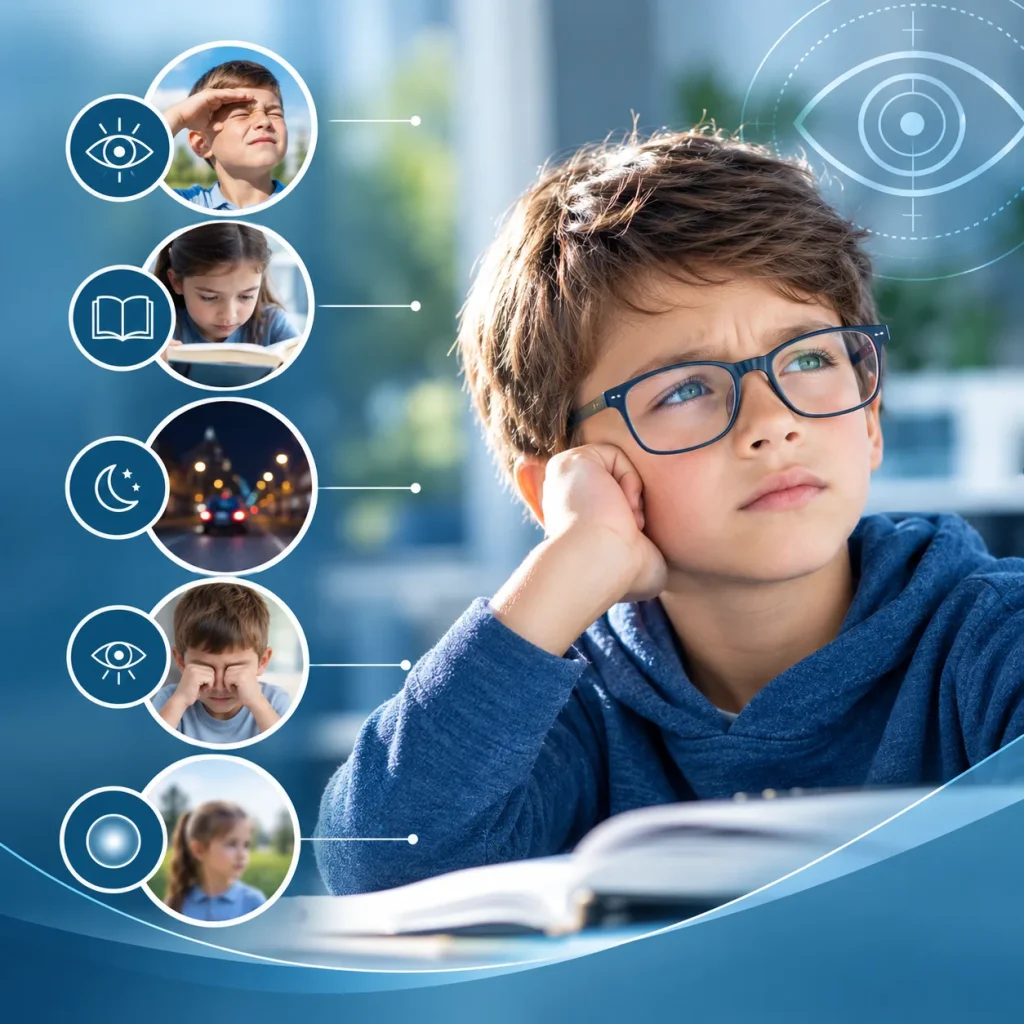
Symptoms to look out for include:
- Blurry distance vision
- Sitting very close to the TV
- Squinting or screwing up eyes
- Holding books, tablets or phones very close to their face
- Struggling to see the board in school
- Headaches
- Tired or strained eyes
- A drop in performance or concentration at school
If you have noticed any of the above, it’s worth getting their eyes checked.
What Conditions are linked to Myopia?
The longer the eye becomes, the more the delicate tissues inside are stretched.
Higher levels of myopia can lead to and increase the risk of conditions including:
- Retinal Detachment
- Myopic Macular Degeneration
- Glaucoma
- Cataract
This is why we don’t just look at your child’s prescription today, we look ahead to where their prescription is heading.
Why is Myopia Management Important?
Children are still growing, and that includes their eyes. The younger a child becomes myopic, the more time there is for their eye to grow and for their prescription to increase. Ordinary prescription glasses correct the blurry vision, they don’t slow the growth of the eye like myopia management lenses do.
That is the main difference between correcting myopia, and managing it.
Our Myopia Assessment
We want to understand not just what your child can see, but what is happening inside their eyes and how quickly things are changing.
Your child’s myopia assessment includes:
- A detailed history, including both parents' optical prescription (if available).
- Discussion about lifestyle; including screen time, close-up work and time spent outdoors.
- A detailed refraction to establish their prescription.
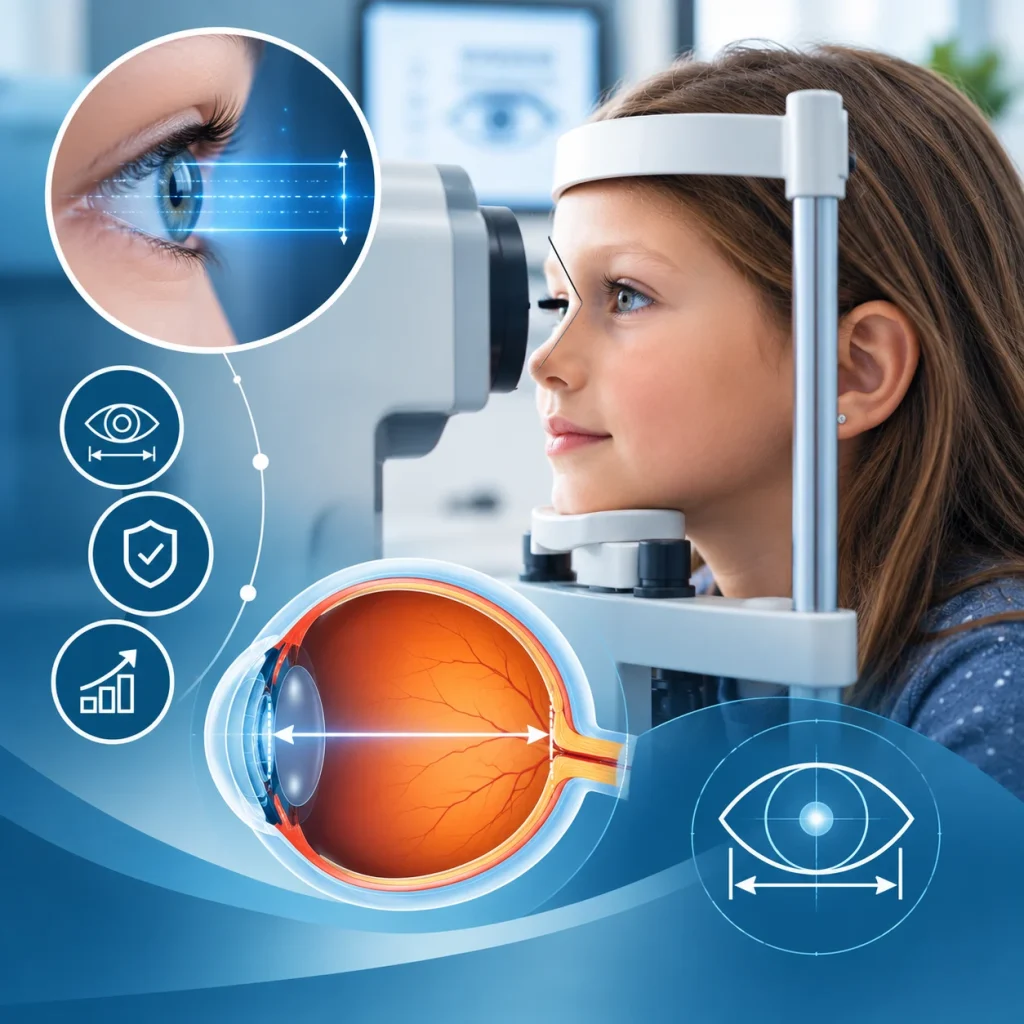
- Measurement of the length of their eye using biometry.
- An assessment of how the two eyes are working together.
- A full eye health examination, including a 3D OCT scan.
After the eye examination and assessment, you’ll be given your child’s prescription, measurements and a clear explanation of what they mean, how we plan to treat them, and if myopia management is appropriate for them. You’ll also receive a full information pack to take home. This is designed to help you and your child understand myopia, the available options and what treatments can involve. It gives time to discuss everything together, and do your own research at home before deciding what is best for you and your child.
Why do we measure the length of the eye?
The prescription tells us how blurry your child’s vision is, but the length of the eye gives us a deeper understanding of what is actually happening, and where your child’s prescription and eye length could end up if they continue to grow at the same rate.
We measure the eye at the first appointment, and continue to monitor at follow up appointments so we can track the measurement over time and see if the treatment is working.
Lifestyle Changes
These lifestyle choices cost nothing, and are worth doing whether your child is having myopia management treatment or not.
- Taking regular breaks from close work - The 20/20/20 rule is a simple one to remember.
- Every 20 minutes, look at something around 20 feet away for 20 seconds.
- Working Distance - Try to keep books, tablets and other close work at least an arm's length away.
- Limit Screen Time - We recommend limiting screen time particularly in school aged children and teenagers.
- Get Outside - Aim for around 2 hours outside every day. Walking to school, playing, relaxing in the garden all count.
Are you concerned or worried your child’s prescription is getting stronger every year?
You don’t have to just accept it.
Please visit us at our Award-Winning Myopia Management Clinic in Shawlands, Glasgow and we’ll assess your child’s eyes, explain your options and help you decide what is right for your child.