
VALEDA
NEW
Not suitable for wet AMD
Revolutionary Valeda Photobiomodulation
Welcome to the Advanced Macular Degeneration Clinic, at the Multi-Award-Winning, Pinder Eyecare, Glasgow.
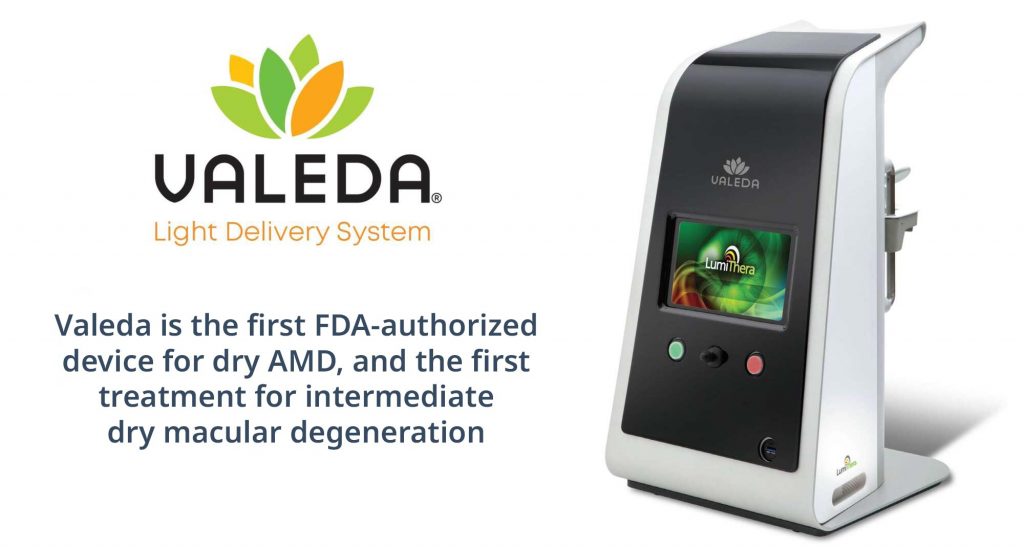
The first FDA-approved treatment for Dry Age-Related Macular Degeneration, is now available at the Multi-Award-Winning Pinder Eyecare in Glasgow.
Supporting You Through Macular Degeneration
If you or someone you love is living with macular degeneration, you’re not alone. There is now a new revolutionary option to help protect and support your vision.
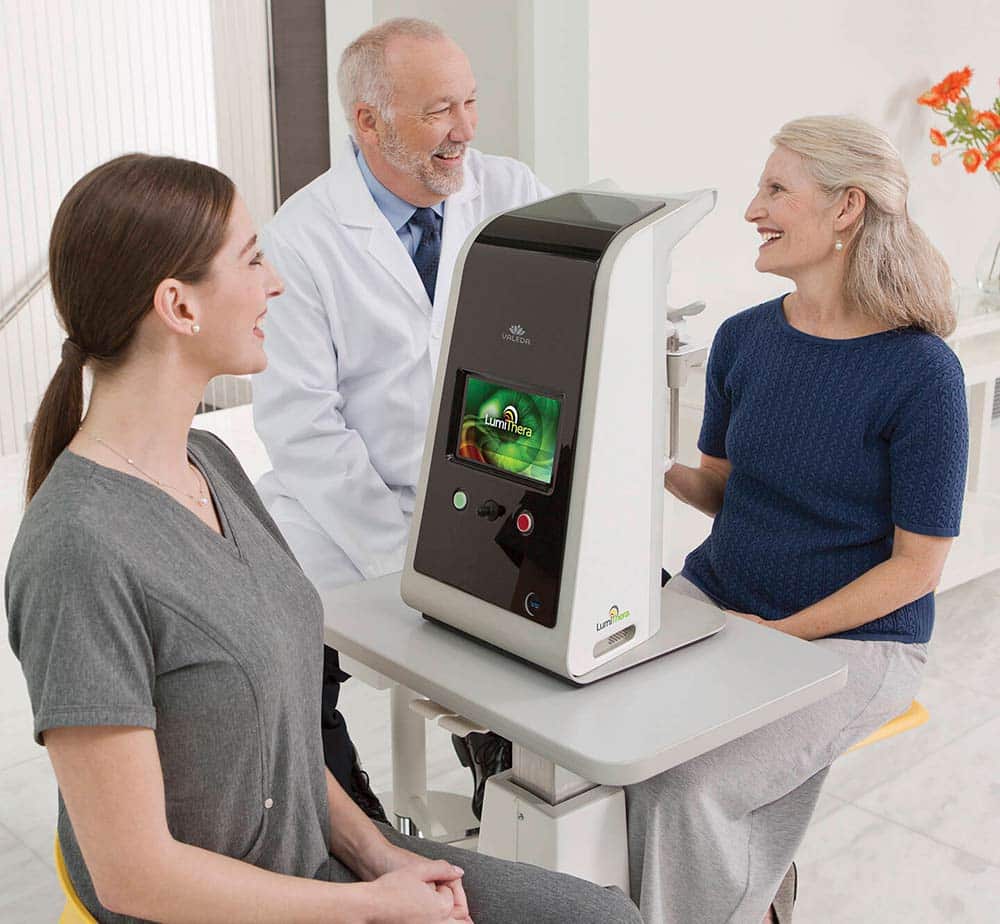
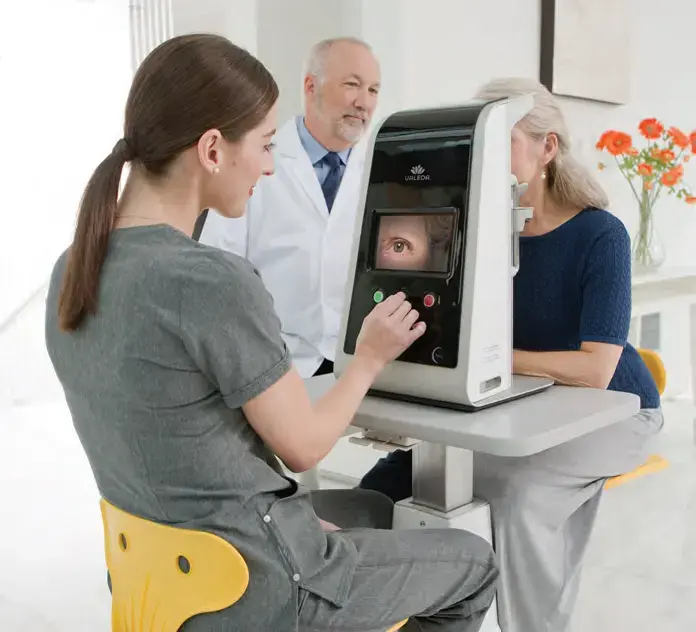
At Pinder Eyecare, we’re proud to offer Valeda Photobiomodulation (PBM) Therapy, an advanced, safe, non-invasive treatment designed to improve retinal health and slow the progression of early to intermediate stage of Dry Age-Related Macular Degeneration (AMD) without the need for injections or surgery.
This gentle light-based therapy works to restore and rejuvenate cellular energy within the eye, helping you maintain clearer, more comfortable vision for longer. Our consulting Optometrists will guide you through every step, offering expert care and genuine support throughout your journey.
Preserving your sight isn’t just about vision – it’s about maintaining and improving your quality of life.
To find out more, book your consultation today. Early intervention and support can make a significant difference.


Understanding Age-Related Macular Degeneration
Age-Related Macular Degeneration (AMD) is a progressive disease and is the leading cause of sight loss in people over 65. AMD affects the macula, which is the central part of the retina responsible for sharp, detailed vision used for reading, recognising faces and driving. With over 700,000 people living with AMD in the UK, and numbers rising with an ageing population, early detection and effective treatment are more vital than ever.
Risk Factors
- Smoking
- Poor Diet
- Genetics
- High Blood Pressure
Types of AMD
Dry AMD
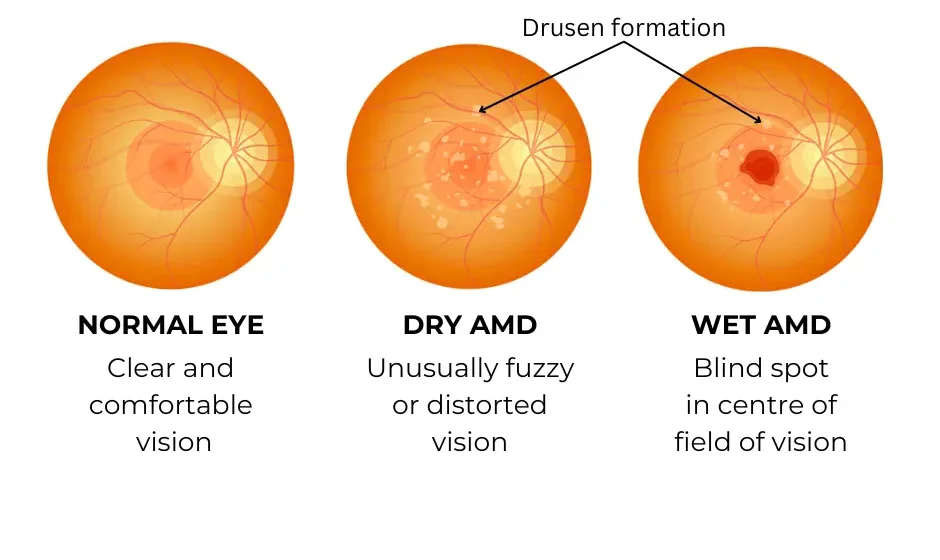
Dry AMD is the most common type of macular degeneration. It develops gradually as the macula, the part of the eye responsible for central vision, begins to thin over time. Small deposits called drusen build up in the retina, placing extra stress on the surrounding cells. As these cells become more damaged and can’t renew as easily, central vision may become blurred or distorted. Although changes are usually gradual, regular monitoring and early intervention can make a real difference in protecting long-term sight.
Wet AMD
Wet AMD is less common, accounting for around 10-15% of cases, but it tends to progress more quickly. It occurs when abnormal blood vessels begin to grow beneath the retina in response to damage caused by drusen. These fragile vessels can leak fluid or blood, causing swelling and scarring that affects central vision, often causing a central blind spot. Because Wet AMD can happen rapidly, early detection and prompt treatment are vital to help preserve further vision loss.

Recognising the Signs & Symptoms
- Blurred or distorted central vision
- Difficulty reading or recognising faces
- Straight lines appear wavy
- Dark or blank patches in central vision
If you recognise any of these signs, it’s important to have a check up. Our Optometrists are here to help.
Our Specialist Approach at Pinder Eyecare
Comprehensive Macular Consultation
At our Macular Clinic in Glasgow, we provide specialist consultations to thoroughly assess your AMD.
- Comprehensive Macular Consultation
- At our Macular Clinic in Glasgow, we provide specialist consultations to thoroughly assess your AMD
- Advanced 3D OCT scans for precise diagnosis including angiography
- Detailed vision testing to establish your baseline
- A personalised treatment plan tailored to your specific needs
Introducing Valeda Light Therapy
We are proud to be a leading provider of Valeda Photobiomodulation Light Delivery Therapy in Scotland – the first FDA-approved treatment specifically for dry AMD.
This innovative therapy utilises photobiomodulation, a process where carefully selected wavelengths of light target the energy producing structures (mitochondria) within your retinal cells.
How Valeda helps
- Stimulate energy production at a cellular level
- Boost antioxidants and reduce inflammation at the macula
- Repair damaged cells and promote healing
- Clear harmful waste products and slow drusen build-up

What to Expect from Your Valeda Treatment
Results from the Lightsite III Clinical Trial
Vision Improvement
67% of patients gained 5 or more letters on the vision chart
Cell Damage Rate
7% showed signs of new cell damage (compared to 24% in untreated group)
FDA Approved
First FDA Approved treatment specifically for dry AMD
Key Clinical Outcomes
Slow Progression
Help preserve vision for longer
Stabilise Vision
Stabilise or improve vision in many patients
Reduce Risk
Lower risk of developing wet AMD
A Comfortable Experience
Comfortable, convenient, and non-invasive
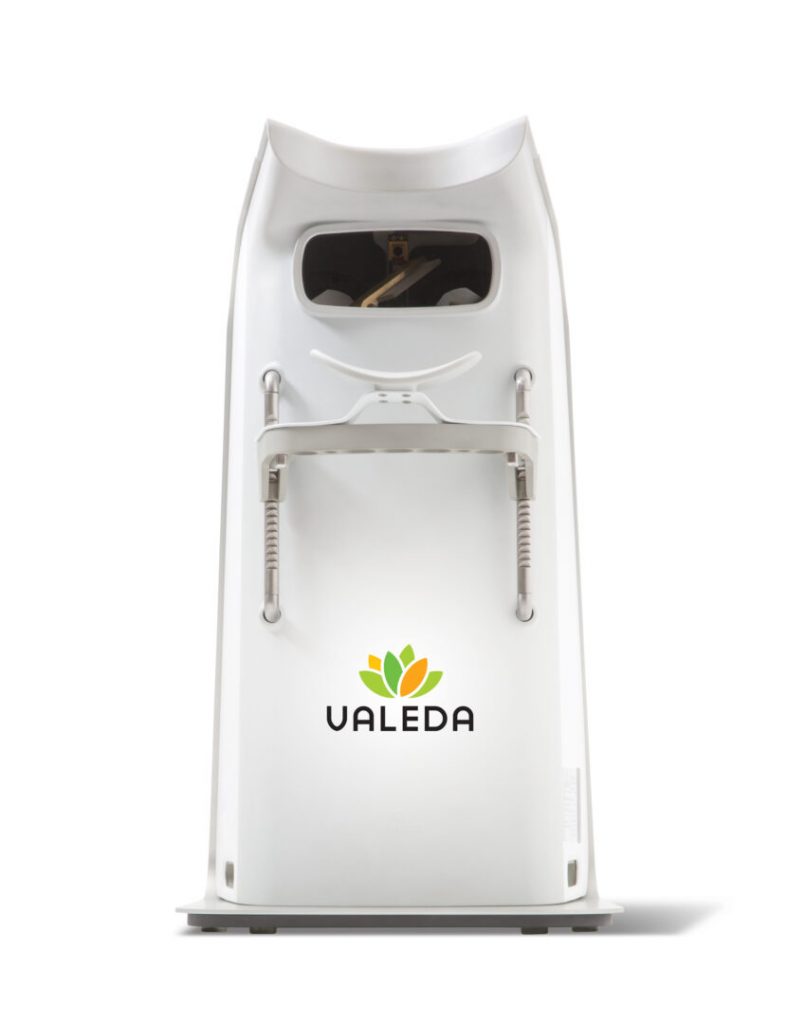
Valeda Photobiomodulation Light Therapy is designed with your comfort in mind. The treatment is completely non-invasive, requiring no needles or eye drops. Each session is quick and painless, and you can return to your normal activities immediately afterward – including driving.
- 5 -10 Minutes - Per Visit for Both Eyes
- 9 treatments per cycle - 3 treatments a week, every 2-3 days, for 3-4 weeks
- Every 4-6 Months - repeat cycle for sustained results
- No discomfort no injections, eye drops or pain
- No downtime - drive immediately after treatment

Pricing for Valeda Light Therapy
Transparent pricing for your peace of mind
Initial Consultation
Each Cycle (9 treatments) - Both Eyes
Each Cycle (9 treatments) - One Eye
Review Appointments
Ask us about potential discounts if you are part of our eyecare plan!
*Pricing is indicative and will be confirmed during your consultation.
Book your Macular Consultation at Pinder Eyecare, Glasgow
If you or a loved one are affected by macular degeneration, early intervention and support can make a significant difference. We are now being contacted and welcoming patients from all over Scotland and beyond who are seeking this new revolutionary treatment. Take the first step towards preserving your vision.
Frequently Asked Questions
Am I suitable for Valeda Light Therapy?
Is Valeda Light Therapy Safe?
Does Valeda work for Wet AMD?
Will I need repeat treatment?
Are there any side effects?
How long does a full Valeda treatment plan take?


